LingoQuest
A language learning game for both children and parents. A card game and app that help families learn a language through play.
- Contribution
- UI/UX Design, Game Design, Identity Design
- Timeline
- Jun to Aug 2025 (10 weeks)
- Tools
- Adobe Illustrator, Photoshop, Figma
Overview
Design Objective
Create a hybrid language learning experience that supports meaningful family interactions, encourages long-term engagement, and offers a scalable framework for at-home and classroom use.
Ideation
Design Approach
Most mainstream language apps teach vocabulary and grammar through repetitive drills or quizzes, often in isolation. Learners, especially young ones, struggle to apply that knowledge beyond the screen. LingoQuest combines digital and physical play so families can learn through shared, story-driven activities.
We focused on two connected user groups: parents and children. To understand their needs, we developed personas and ran interviews, observational testing and prototype play sessions. Designing for both perspectives led to a co-learning experience that strengthens family connection while supporting language growth.
Color
Typefaces
- Cera Round Pro Black
- Cera Round Pro Medium
- Cera Round Pro
- Cera Round Pro Light
Research
What Families Told Us
Interviews and play sessions with parents and children showed the same gap: people know words but have no easy way to use them together.
“I know some words, but I don't know when or how to actually use them.”Child A
“The games are fun at first, but I stop using the app after a few days.”Child B
“I want to practice with my child, but I don't know how to support them during the activities.”Parent A
“I don't know what my child remembers or if they're actually improving.”Parent B
Production
On-Site: A Card Game for Families
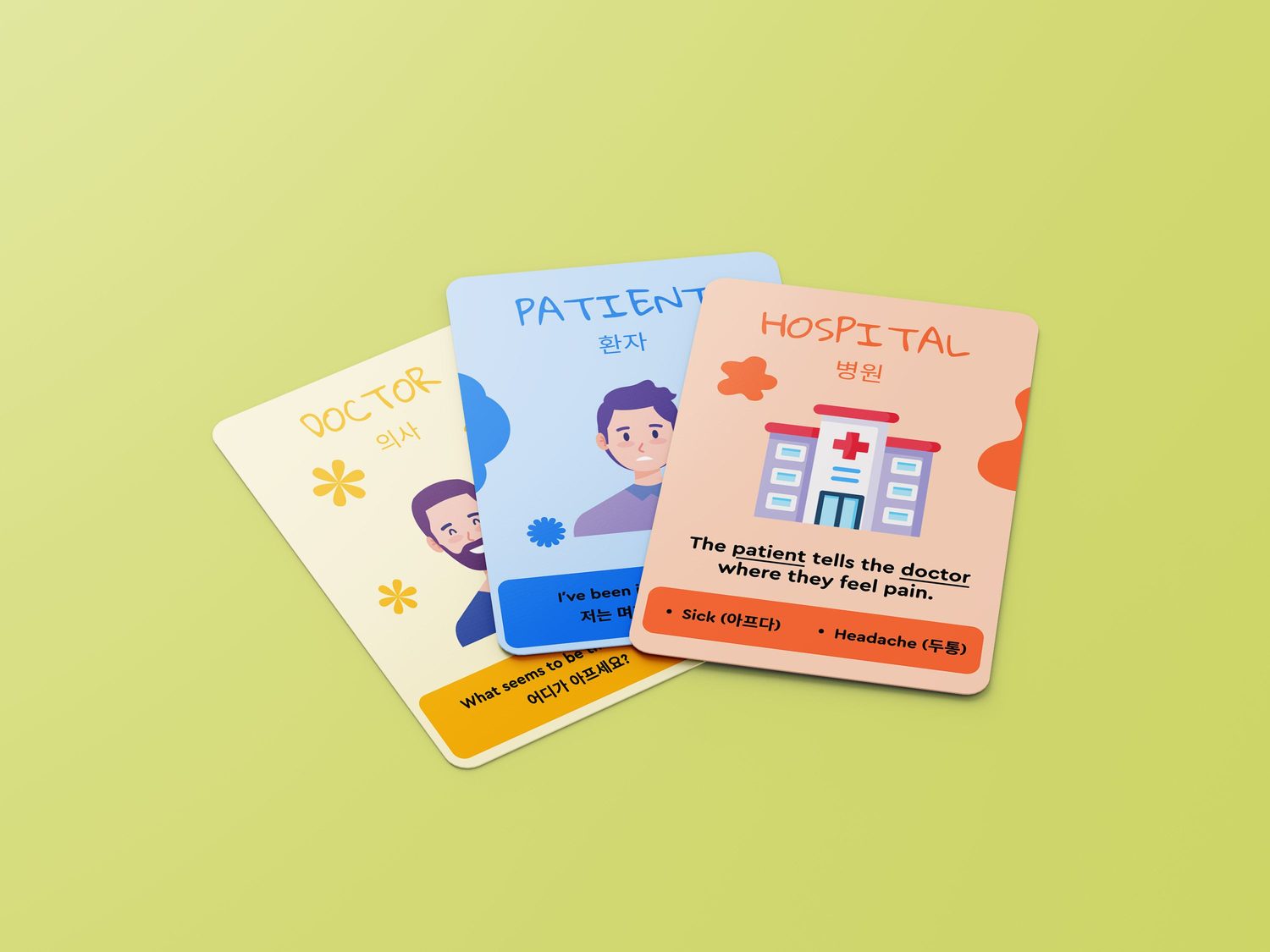
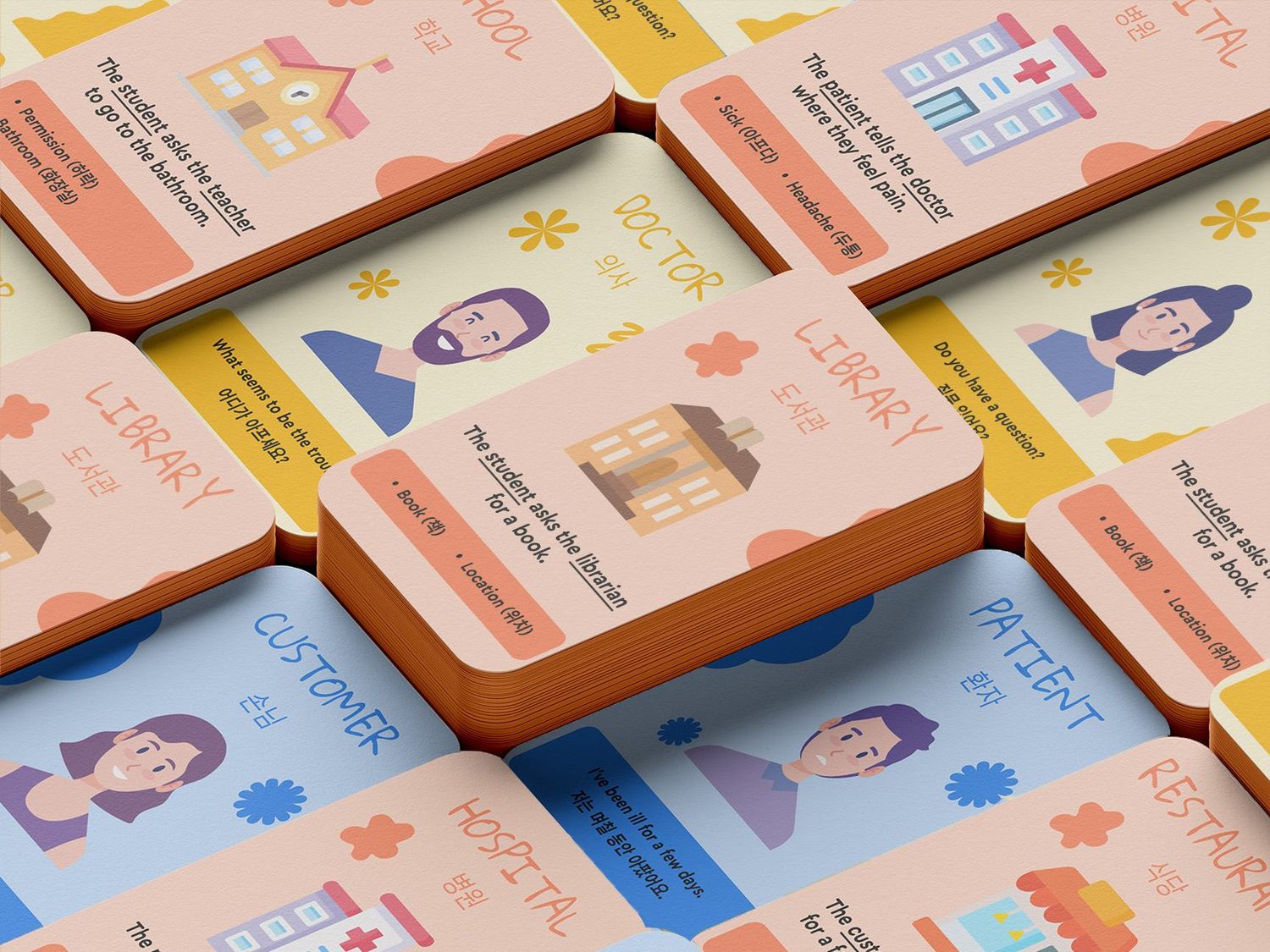
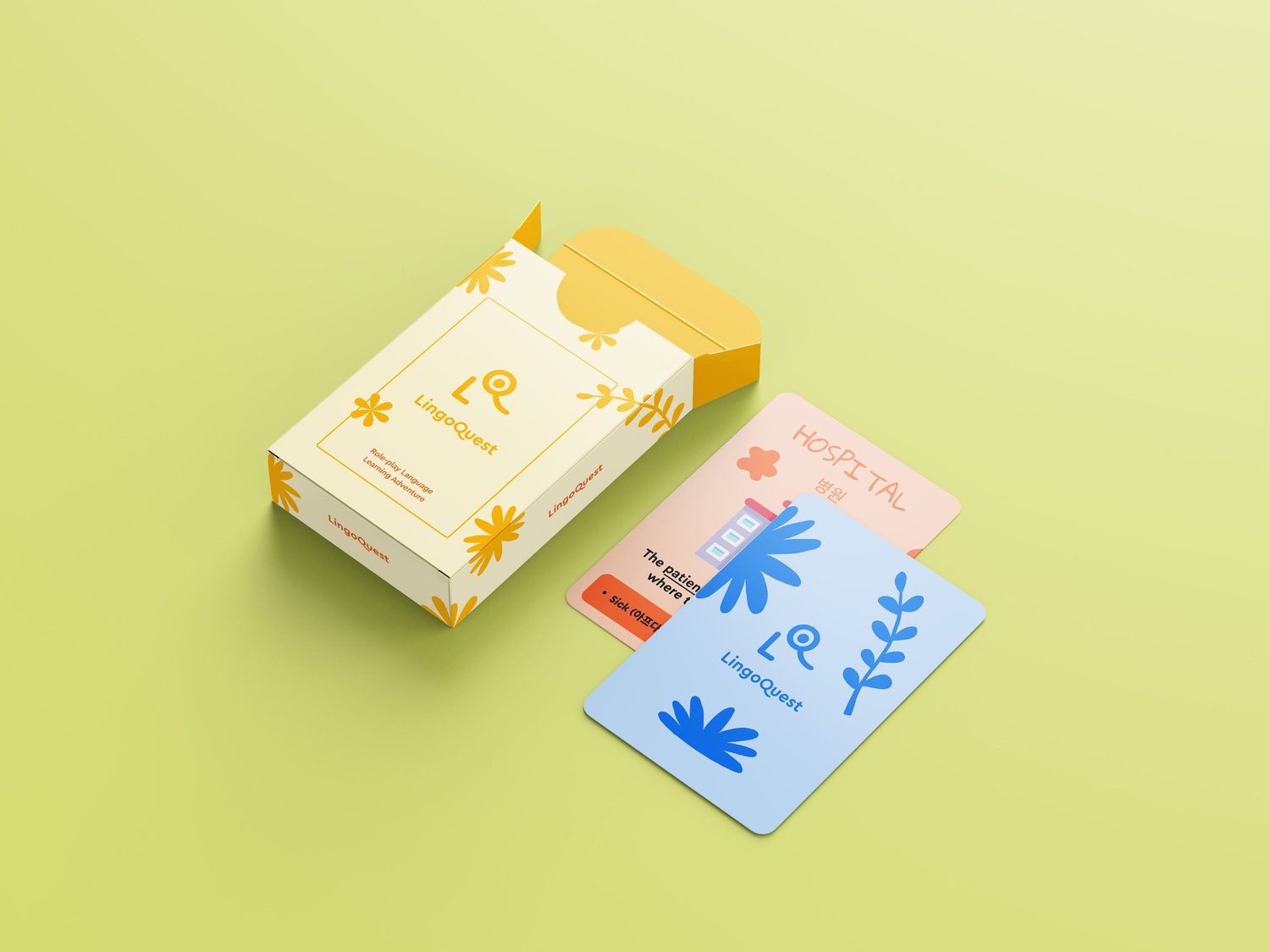
Families struggle to find shared learning that is both fun and useful. LingoQuest is a physical card game where parents and children take on roles and act out scenes in the target language.
Role-play flashcards set scenes such as “At the Supermarket” or “At the Restaurant,” each with illustrated vocabulary, real-life phrases and dialogue cues.
Mission cards add a clear, task-based challenge to every round, for example “Order 3 things using the following words.” The missions encourage teamwork and give purpose to real language use.
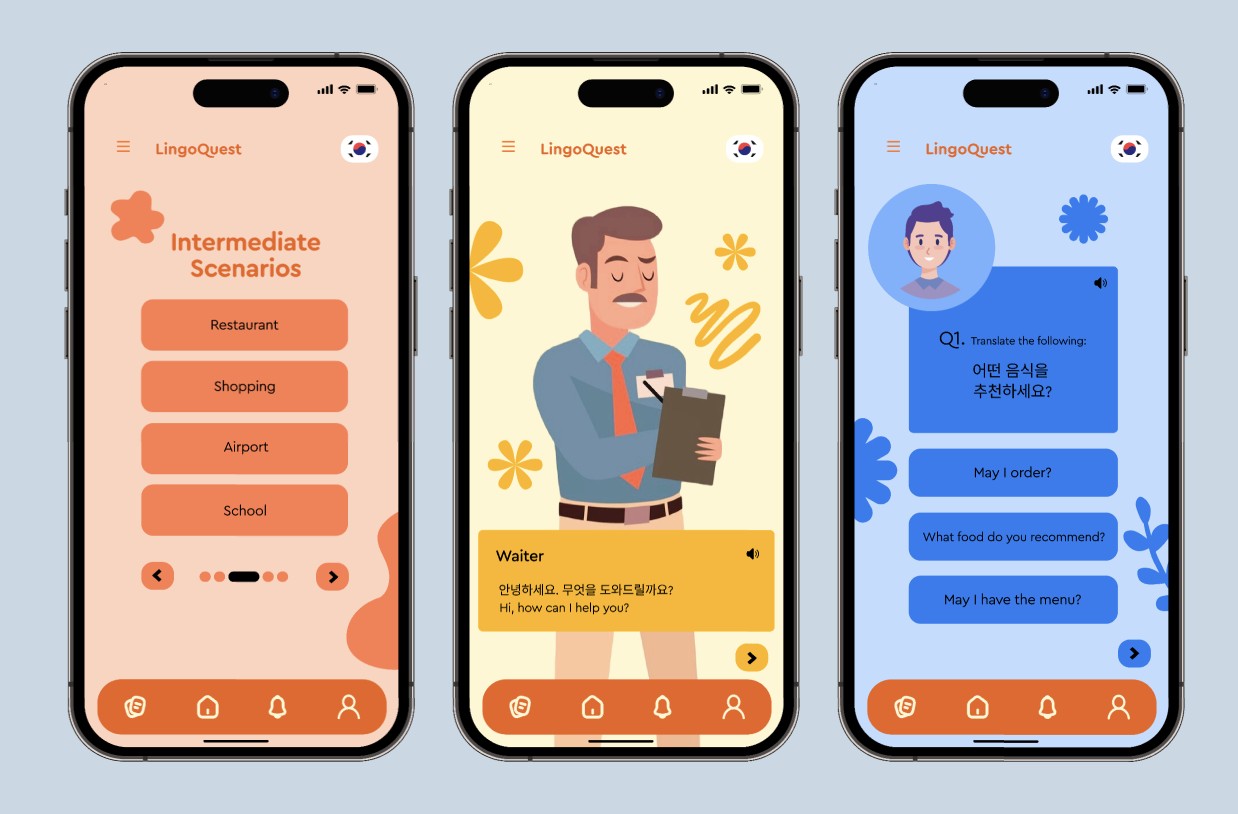
Off-Site: An App That Keeps It Going
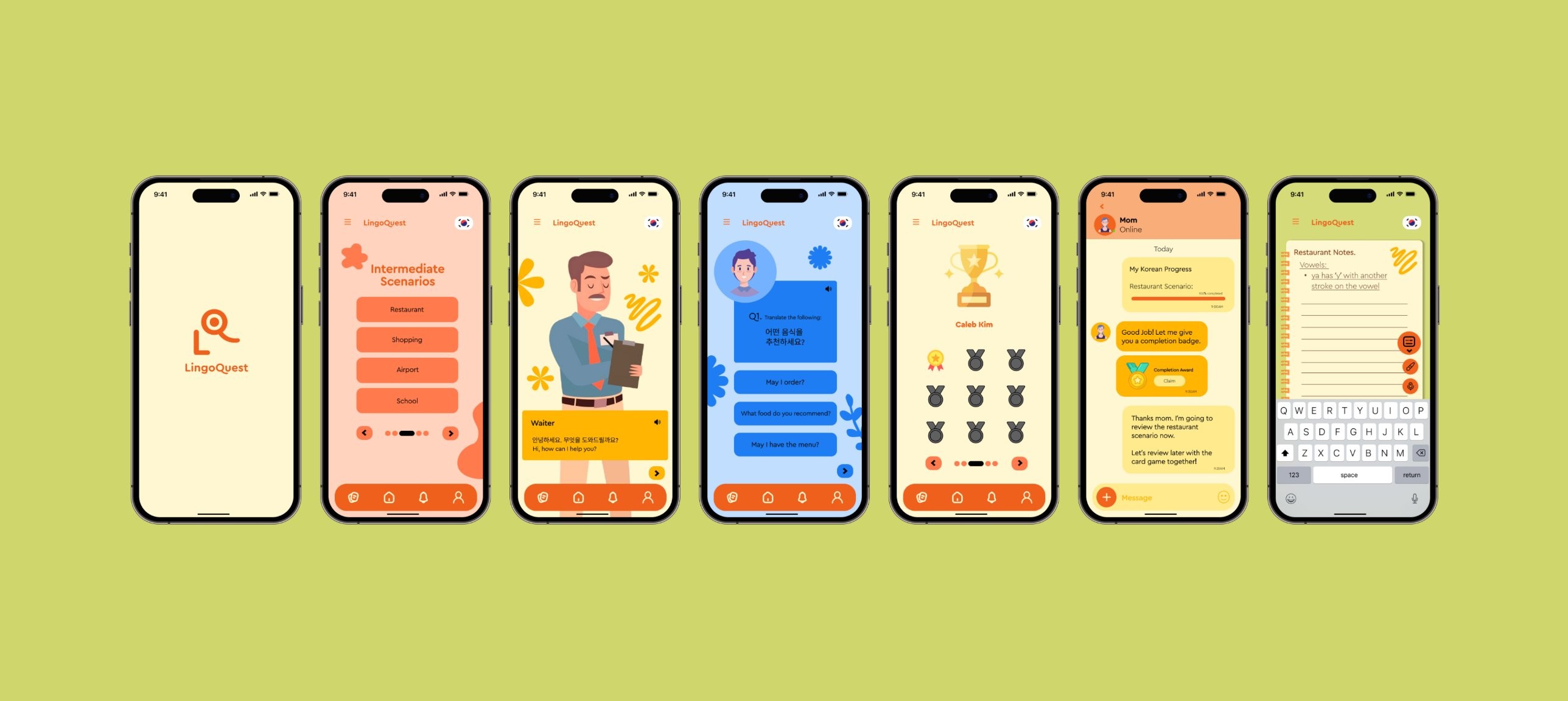
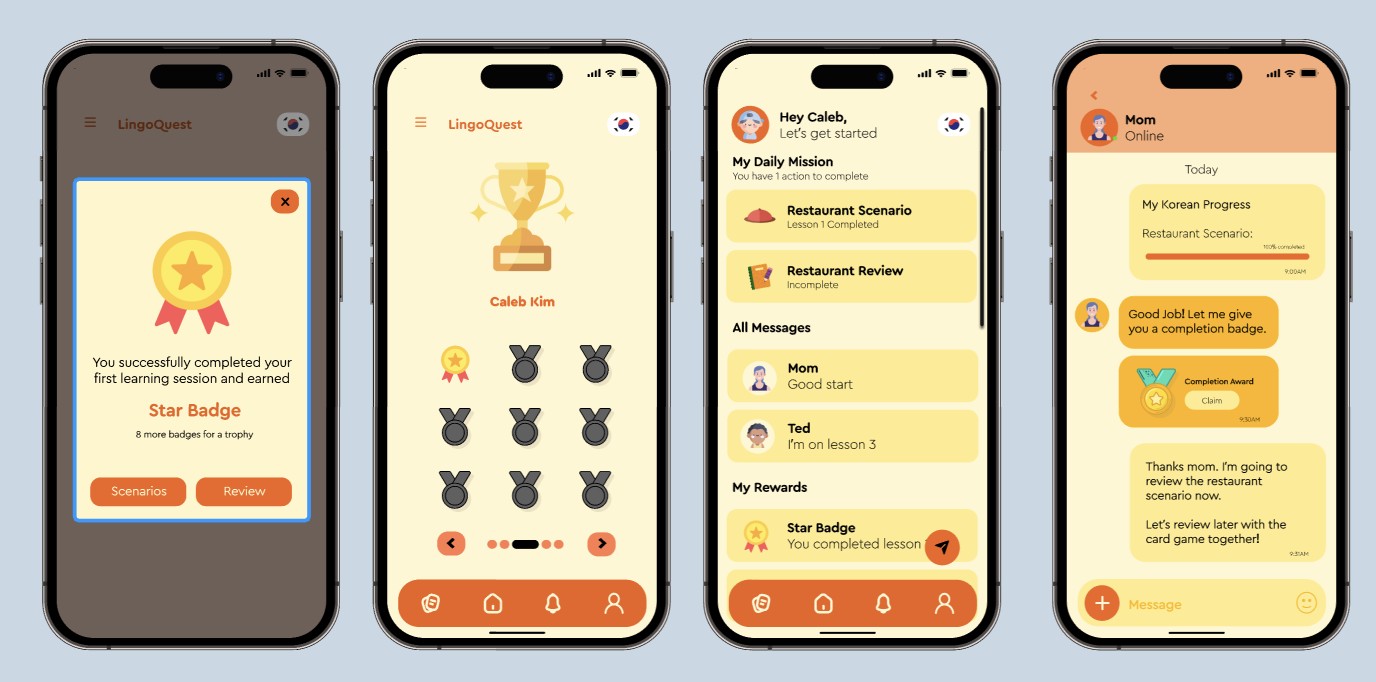
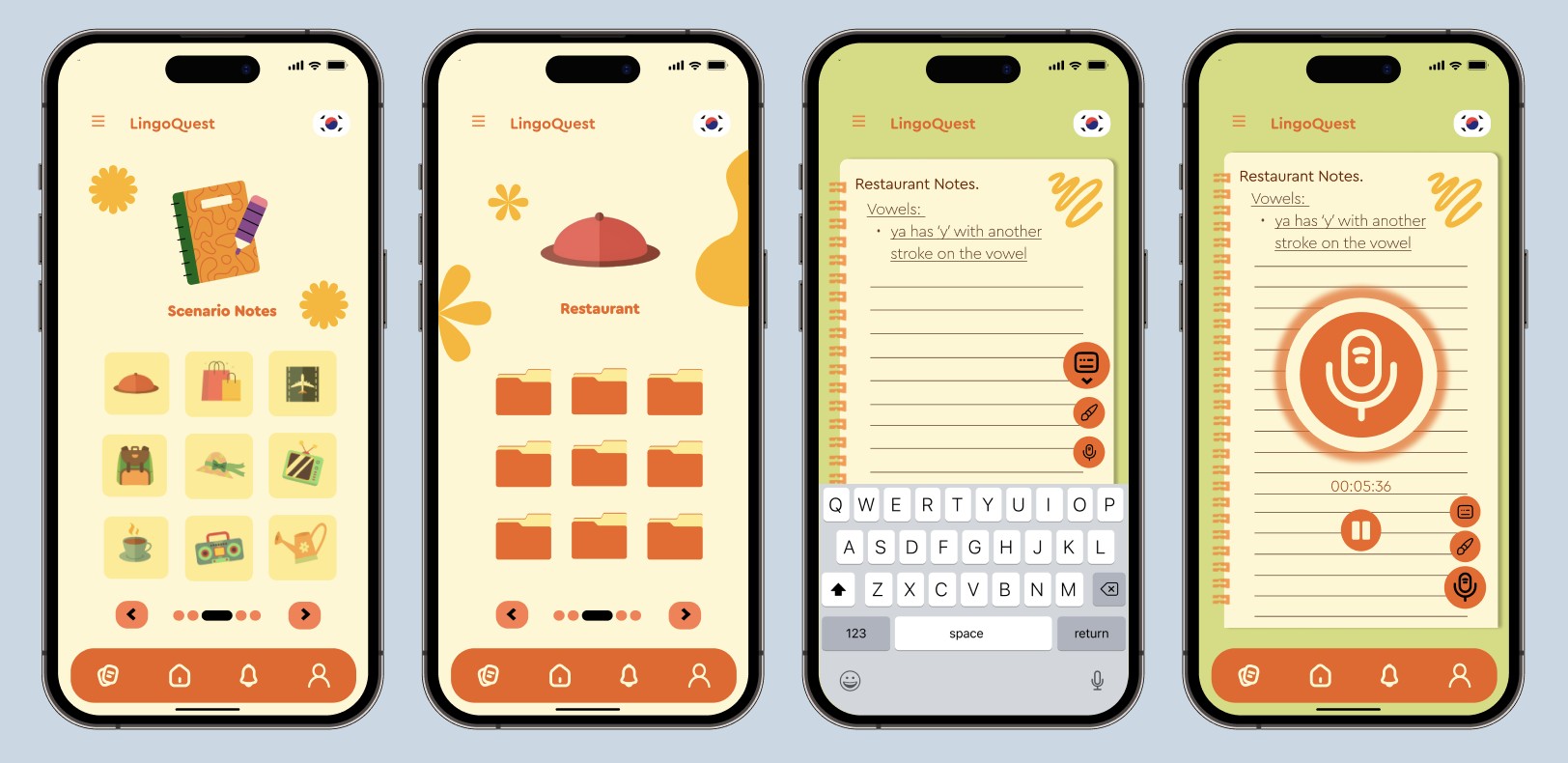
Apps are convenient, but children lose motivation without feedback and parents are left out of the loop. The app adds structure, progress tracking and rewards for both.
Shared messaging and rewards let children and parents send encouragement and award each other badges. A tracking system shows progress so nobody gets lost along the way.
Results
What Happened
With a gamified app experience and clear progress tracking, children stay motivated and consistent. Parents gain insightful tools to support learning at home, leading to higher retention and satisfaction.
Reflection
Designing LingoQuest challenged me to think beyond just user interfaces. I had to consider how design could facilitate meaningful family relationships through shared language learning. One of the most difficult yet rewarding parts was balancing the onsite, physical game components with the offsite mobile experience in a way that felt seamless and mutually reinforcing.
If I had more time, I would explore how to build a more adaptive system that evolves with a child’s progress and family dynamics. I’m also curious about how to make the program scalable through classroom integration or community-based sharing. How can the experience feel personalized while remaining accessible across different cultures, schedules, and parenting styles?